The Great Data Lockdown: Bill Gurley on the Battle for Enterprise Intelligence
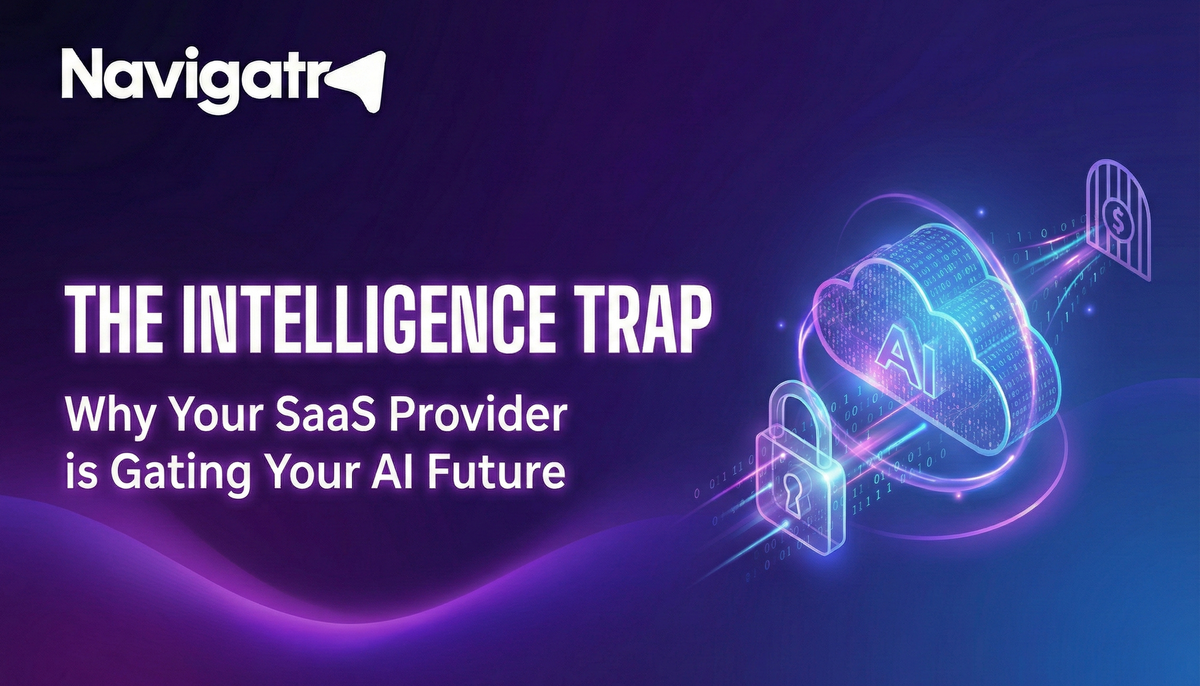
Bill Gurley, the prominent venture capitalist and General Partner at Benchmark who is renowned for his early investments in companies like Uber, recently highlighted a disturbing trend in enterprise software. Vendors are forcing changes to their terms of service, explicitly stating that customers cannot train AI models on the data stored within those platforms.
Gurley expressed disbelief that an enterprise could pay a seven or eight-figure licence to a vendor like Salesforce, only to be told they cannot train models on their own customer data. This data includes essentially everything a company would want to analyse about its customers.
For operations leaders and the C-suite, this is no longer just an IT issue. It is a fundamental battle over who owns the intelligence layer of your enterprise software—and whether you should stick with the status quo or stay locked in the perpetual seat model.
Why Vendors are Locking Down Your Data
When a vendor restricts you from using your own data to train external models, the logic often feels entirely backwards to the customer. However, the vendor's motivations are highly strategic:
- Control of the AI layer: Vendors want to nudge customers toward their own AI stacks, such as Salesforce's Einstein, to protect their long-term moat. If customers freely build their own AI layers outside the platform, the vendor's power weakens.
- Commercial leverage: AI capabilities are becoming the next premium SKU. By owning the training environment, vendors keep you hooked and charge accordingly.
- System protection: Vendors also argue for data isolation, claiming that unrestricted training could accidentally mix data across multi-tenant systems.
The result is that vendors intend to train on your data themselves and sell you back their specific, AI-agentic view of it.
The Customer Frustration: Renting Your Own Memory
The data inside a CRM is the operating memory of a company's revenue engine. Think:
- Customer interaction history.
- Deal pipelines.
- Support conversations.
- Account relationships.
- Internal notes and documents.
When you are paying massive licensing fees, the expectation is that the platform is infrastructure, not a gatekeeper to your own information. When a vendor says you cannot train models on that dataset outside their ecosystem, the natural customer reaction is to ask: "WTF?"
The Emerging "Open vs Closed" Divide
Battle lines are being drawn, and we are witnessing the emergence of two distinct philosophical approaches to enterprise applications:
- Closed Data Platforms: In this model, data can be queried through APIs, but AI must run through the vendor’s models. Training external models is strictly restricted, which ultimately protects the vendor’s AI business.
- Open Data Platforms: This approach grants full export rights and clear permissions to train models on your data. Vendor AI is treated as optional rather than mandatory.
- Self-Owned: This is the "scary" option vendors are trying to build a moat around. With the right skills, time, and capability, it's not implausible that companies could build their own, more effective versions of big SaaS solutions. Locking your data now is the biggest insurance policy vendors can take against this.
Gurley predicts that competitors to closed systems like Salesforce will immediately declare themselves "open data" to try and steal as many customers as possible. If you were building a competitor today, pitching "Your data is yours" would be a massive customer acquisition strategy. This open message resonates strongly with enterprises building internal AI agents, companies creating proprietary models, and organisations worried about vendor lock-in.
The Navigatr Verdict: Owning Your Operational Future
There are two possible futures for the enterprise. In the first, data lives in the SaaS platform, AI runs inside that platform, and customers merely consume AI features. In the second, data flows into internal data platforms where companies train their own models, treating the SaaS vendor as just another data source. Or, you build it yourself and own your future through custom SaaS.
If vendors fight this behaviour too aggressively, they risk pushing their customers entirely toward open or self-built ecosystems. CRM just happens to be the first major battlefield, but this tension is going to show up across almost every SaaS category.